


The activities of this site are subject to the laws and regulations of the Islamic Republic of Iran. | ||
| ........."Boost your bussiness with NASSAJ YAR" |  |
.. Un limited free Ads | WhatsApp: 0098 9135889308 | |
|
Certificate
Sub category
User sign in
Advertisement
Advertisement
Advertisement
Newsletter
Help
Information
News
Online payment
Hit Counter
|
Back to news list
News detail
Title : The Future Dependency of the Textile Industry on Automation
Register date : February 24, 2026, 4:14 pm
Hits : 36
Detail :
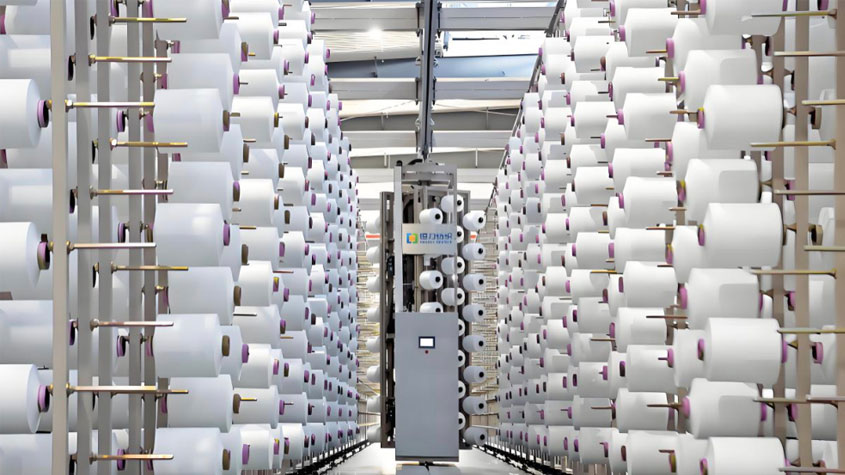
Automation did not enter textile production as a passing trend. The primary reason for its adoption is that traditional methods have failed under existing pressures. Rising costs, tighter delivery schedules, global competition, and high quality expectations have forced manufacturers to reconsider how work is actually done. This shift in mindset is closely linked to the evolution of modern textile machinery. Textile businesses are under genuine pressure. Profit margins in textile manufacturing have not expanded significantly. Raw material prices fluctuate, energy costs are unpredictable, and buyers expect faster delivery without paying a premium, all while maintaining high quality standards. In such an environment, relying solely on manual control increases risk. Human skill is valuable, but it is inherently inconsistent. Fatigue, shift changes, and varying experience levels directly impact output quality. Automation can reduce this uncertainty. When processes are controlled through systems rather than manual adjustments, consistency and quality improve. Therefore, the use of advanced textile machinery has become a necessity, not merely an upgrade. Workforce availability is changing the rules of the game. Production managers understand this challenge well. Skilled operators are increasingly difficult to find and retain. Training is time-consuming, and trained personnel often leave. Automation helps stabilize production operations even as team composition changes. Machinery capable of automatically adjusting speed, tension, and patterns reduces production's dependency on individual skill levels. Automation shifts the operator's role from comprehensive system control to system supervision. This change does not eliminate people from the production process; it transforms their function. Modern textile machinery is designed to support operators. Unlike older equipment, these machines do not require constant operator presence to monitor production performance. Quality is no longer negotiable. In the past, minor defects could be corrected during finishing, or some buyers would accept them. That flexibility has diminished significantly. Export markets, major brands, and even domestic customers demand consistent quality throughout their entire order. Automation enables more precise control over repeatable processes. Once settings are defined on a system, they remain constant throughout production. This reduces deviations from specifications, rework, and the likelihood of shipment rejection or return by buyers. In automated machinery, because the system records the production process, quality issues become significantly easier to trace and resolve.
Speed Alone Does Not Solve Problems Many production units increase machine speed to boost output. However, this often leads to more machine breakdowns, increased waste, and pressure on production teams. Automation approaches productivity differently. Rather than inefficiently increasing speed, it optimizes how machinery operates. Downtime decreases, changeovers become smoother, and machines run closer to their ideal performance range. This is where precisely engineered textile machinery makes a difference. When automation is embedded in initial machine design, productivity increases without causing instability. In the past, textile operations relied heavily on instinct and experience. Experience cannot be discounted, but despite its advantages, it has limitations. Automated systems generate real-time data. Efficiency trends, downtime reasons, energy consumption, and maintenance requirements become visible. Decisions are no longer based on assumptions. Access to real-time information helps managers maintain control. Automation prevents numerous problems and unwanted production stoppages. Over time, implementing automation fundamentally changes how managers make decisions, plan, and invest.
Energy and Waste Can No Longer Be Ignored Previously, energy efficiency was discussed mainly as a cost reduction measure. Today, however, it is influenced by government regulations, customer perspectives, and long-term business sustainability. Automation helps reduce unnecessary machine movements, overloads, and human errors. It essentially helps machinery operate more efficiently. Consequently, waste decreases, rework volume lessens, and raw material consumption becomes more optimized. Efficient textile machinery supports both profitability and environmental sustainability—two interconnected concerns in today's business world. A common misconception is that automation makes production rigid and inflexible. In reality, the opposite is occurring. Automation supports flexibility. In automated systems, changeovers can be performed quickly with simple adjustments. This capability helps manufacturers manage smaller order volumes, diverse designs, and frequent order changes. Modern textile machinery is designed with flexibility in mind, enabling businesses to respond to varied market demands.
An Honest Look at the Future
♦ References
♦ Link
.
. Please Follow us on Social Media.
|







Nassajyar The first advertising specialty portal of textile and related industries.
According to Article 3 of the Regulations Article 7 of the Consumer Protection Law, Responsibility of the False Advertising is on the Client and Ad-builder.
To start advertising, first click on the Registration link, after filling in the registration form, Submit Your Ads.Firefox is the best browser for displaying the site.