


Scientists spaghetti machine advances textile recycling
Scientists spaghetti machine advances textile recycling
Engineers at Massachusetts Institute of Technology (MIT) in the US have developed a recyclable polyethylene-based elastic yarn that offers an alternative to conventional spandex blends.
The team s new yarn is designed to replicate the stretch and durability of conventional spandex-polyester or spandex-nylon yarns while remaining fully recyclable. Unlike existing elastic yarns, which combine different materials that must be chemically separated before recycling, the new product uses two polyethylene-based materials from the same chemical family.
The recyclability of existing elastic fabrics is a big problem in the US. More than 10 million tonnes of textiles end up in landfill or go for incineration. Textile-to-textile recycling remains limited, particularly for garments containing elastic fibres.
Repeated melting
Eighty percent of textiles on the US market currently contain some amount of spandex, which makes them non-recyclable, says Svetlana Boriskina, a research scientist in MITs Department of Mechanical Engineering in Cambridge. Theres no widely adopted technology that recycles textiles into textiles. With our new yarn, we hope to change that.
To demonstrate the materials recyclability, researchers repeatedly melted and re-spun the yarn. After ten recycling cycles, testing showed the material retained the strength and flexibility of conventional thread.
The yarn features a stretchy polyethylene-based core surrounded by a tougher polyethylene sheath. Because both components share the same underlying chemistry, the entire yarn can be recycled without the chemical separation required for traditional elastic fibres.
Because they are exactly the same chemistry, they play nicely together, Boriskina explains. Thats what makes this yarn very recyclable.
Fine fibres
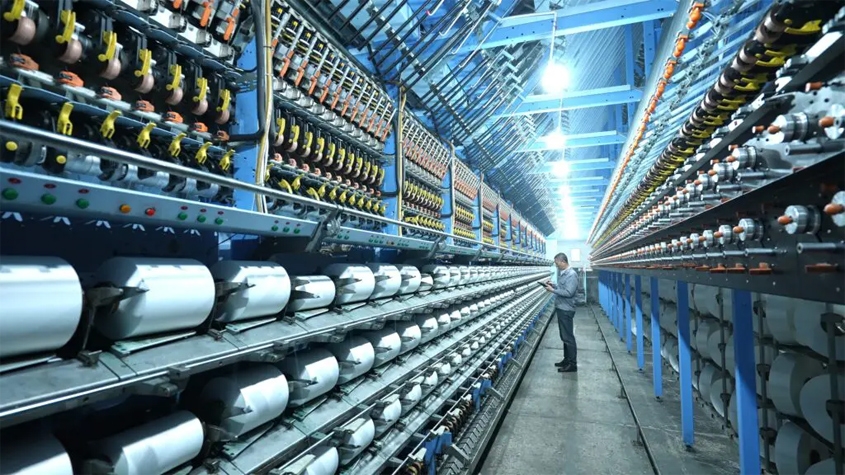
The research builds on earlier work by the team showing that polyethylene can be spun into textile fibres. Lead author SeongHyeon Kim compared the manufacturing process to a spaghetti machine, with polyethylene pellets melted and extruded into fine fibres before being assembled into elastic yarn.
The researchers believe the technology can be scaled up for industrial production. Garments made from the new yarn could eventually be collected through recycling systems, melted down and respun into new textiles or moulded into plastic accessories such as buttons and belt buckles, supporting a more circular textile economy.
The findings have been published in ACS Materials Letters by Boriskina, Kim and colleagues Duo Xu, Volodymyr Korolovych, Domingo Flores-Hernandez, Kaniz Moriam and Daniel Braconnier. Their work received support from the US Army Research Office, the Office of Naval Research Global and the MIT Portugal Program.
Don't hesitate to contact us to share your input and ideas. Subscribe to the magazine or (free) newsletter.
♦ References
►https://recyclinginternational.com
.
.
Please Follow us on Social Media.
 |  |  |  |  |  |










| بازديد | تاريخ |
| ۱۷۲۲ | ۷/۱ |
| ۵۰۰۶ | ۶/۳۱ |
| ۱۰۴۶۸ | ۶/۳۰ |
| ۱۴۴۸۴ | ۶/۲۹ |
| ۴۷۷۴ | ۶/۲۸ |
| ۴۲۰۸ | ۶/۲۷ |
| ۵۴۰۶ | ۶/۲۶ |

