


SupraWeave project pioneering a levitating shuttle
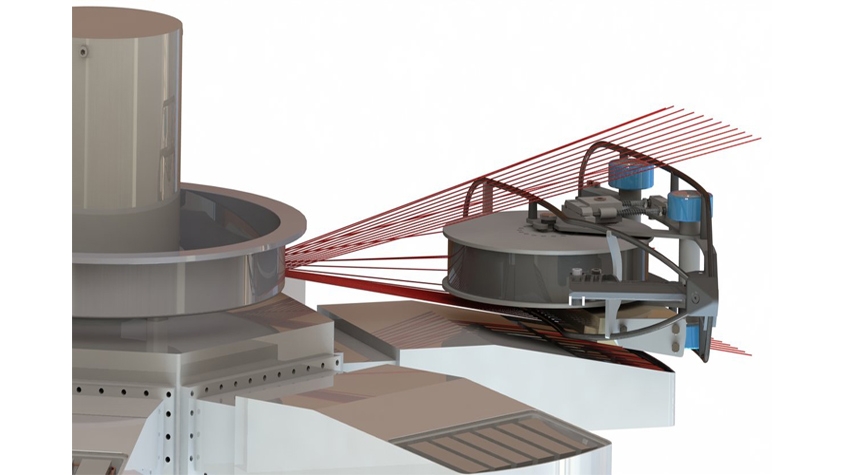
SupraWeave project pioneering a levitating shuttle
Goal is to be able to process delicate, high-performance fibres on circular looms.
At the forthcoming Aachen-Dresden-Denkendorf International Textile Conference (ADD-ITC) 2026, which will take place from November 26-27 at the International Congress Centre in Dresden, Germany, Oliver de Haas of evico GmbH will provide details of the SupraWeave project.
This is dedicated to fundamentally transforming circular weaving technology through the use of a superconducting weft insertion system. The goal is to process delicate, high-performance fibres such as glass and carbon on circular looms.
Such fibres are indispensable in industries such as aerospace, automotive, and energy technology, but their fragility and the high mechanical stresses of conventional circular weaving processes have so far posed an insurmountable hurdle and processing is only currently possible on flatbed looms.
The project's main innovation is the use of superconducting magnetic bearings which enable frictionless, precise guidance of a levitating shuttle. This new weft insertion system is complemented by low-damage guidance of the warp and weft yarns enabling a level of material protection that has never been achieved before.
A holistic development approach is being taken in the project, ranging from the modelling of the magnetic bearings and yarn guidance to the adjustment of the fabric take-off, and on to the production and characterisation of the end products. Particular emphasis is being placed on validating the developed models and algorithms to ensure the high reliability and efficiency of the new technology.
As part of the project, a weft feeder for a Starlinger circular loom is this year being developed by the Institute for Textile Machinery and High Performance Textile Materials at TU Dresden in collaboration with Dresden-based evico.
This feeder floats through the shed without contact using a superconducting magnetic bearing and initial tests have shown very promising results.
Biaxial tapes
Evico emerged from the Leibniz-Institute for Solid State and Materials Research in 2004, responding to the demand for biaxially textured substrate tapes for the development of coated conductor production technology. The patent-pended technology to manufacture cube-textured substrate tapes that consist of a nickel-tungsten alloy was developed at TU Dresden.
♦ References
►https://www.innovationintextiles.com
.
.
Please Follow us on Social Media.
 |  |  |  |  |  |







| بازديد | تاريخ |
| ۳۷۹۴ | ۶/۲۳ |
| ۲۴۹۰ | ۶/۲۲ |
| ۴۶۴۰ | ۶/۲۱ |
| ۴۹۰۰ | ۶/۲۰ |
| ۴۱۶۲ | ۶/۱۹ |
| ۶۰۷۰ | ۶/۱۸ |
| ۸۲۳۲ | ۶/۱۷ |

